

Maximise efficiency to progress your bike leg
Wanting to run faster?
With running it is crucial to build up gradually
Running, more so than swimming and biking is the one that most people find cause them the most injuries. Therefore it’s crucial to build up gradually when starting out or coming back from injury.
Remember the 10% rule.
Running is also the most natural of the 3 triathlon sports. Styles differ, and for the most part there are parts of your style that you may not change easily, no matter how hard you try.
As far as triathlon run training goes the run training should concentrate more on graining aerobic strength – gained through running your longer runs over hilly terrain – letting the terrain work you rather than you busting yourself, week in week out at the track, running intervals that are being run at speeds that you will usually never do during a race.
Not all of us can win running races but we can learn how to run as smooth as some of the top runners that do. Learning proper running form will eliminate wasted energy, achieve an optimal running posture and coordinate your arms and legs in one fluid motion. Below is an outline of broken down portions of the body and lists what we should be aiming to do to strive to have optimum running form.
Head
Your head should be upright, not buried in your chest or cocked back as if your looking at the sky. An upright head ensures that air has a clear passage in and out of the lungs.

Shoulders
Should hang loose and low, not be hunched up around your ears. As a small pre run loosener do 20 ‘windmills’ with both arms together – forward and back.
Arms
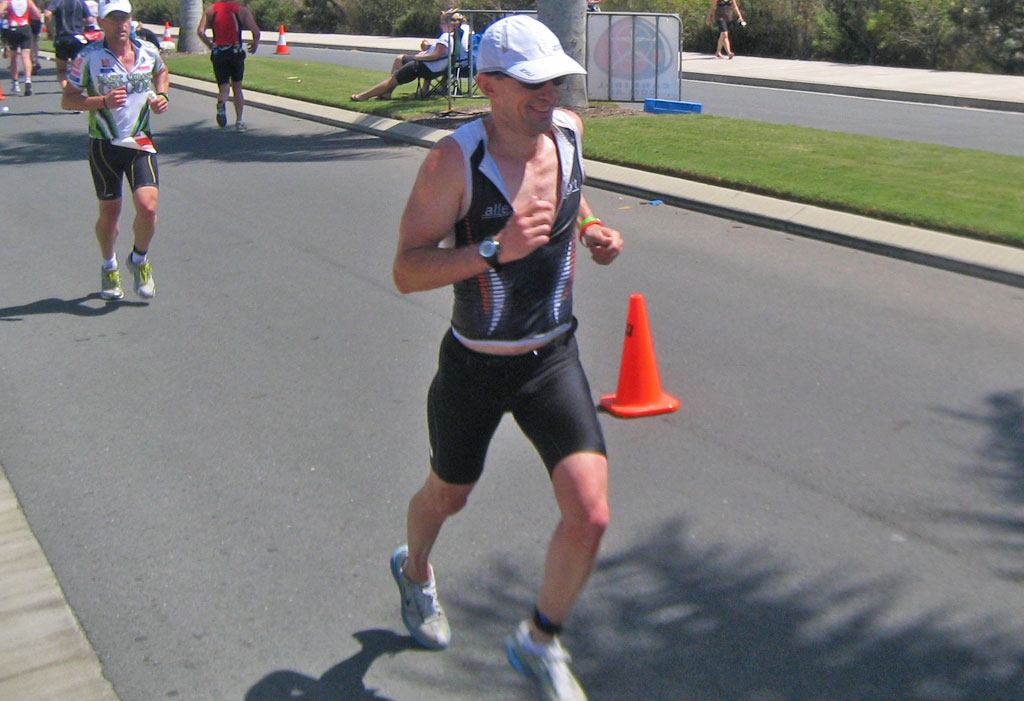
Your forearms should be at 90-degree angles to your upper arms and should stay roughly parallel to the ground as you run. Keep your arms close to your body, so your hands and forearms almost clip the top of your shorts as they swing. Pump your arms from front to back, with your hands coming only slightly across your stomach.
Torso
Concentrate on running tall with your torso perpendicular to the running surface. Some runners lean to far forward. Leaning too far forward keeps your legs from extending properly. Being hunched over will also put extra pressure on your lungs and diaphragm. Leaning too far back will restrict forward momentum. You can aim for a slight forward learn but working to have your shoulders hips and ankles all aligned as your feet strike the ground.
Hips
Touch your hips directly under your torso. Generally is your back is upright and your running tall then your hips will follow.
Hands – Your thumbs are the keys to keeping your hands loose. Rest your thumbs lightly on your index fingers with your palms facing each other. Two tried and true tips are – imagine you are holding a smiths crisp in your hands without breaking them or pretend you have a handful of sand and let it run through your fingers.
Feet
With each step, you should land lightly on your mid to fore-foot. Heel – toe foot strike will slow you down and you foot will be on the ground for too long. Life you foot of the ground rather then push off with your toes. You should be trying to get you heel to lift up ender your hips during the recovery phase.
Stride
Aim for a short light stride rather than a big one. Over striding will actually slow you down. Each foot strike of the ground should land directly under your body – not out front of you.
Cadence
Look for a fast turn over where you aim to hit the group (both feet) at 170+ hits per minute. 180-190 is better. Aim to do this cadence even in easy runs.
Not all of us can win running races but we can learn how to run as smooth as some of the top runners that do. Learning proper running form will eliminate wasted energy
Running Drills
Have been used by generations by great coaches from around the World.
Age group triathletes, unless they have been training with a organised running or tri group may have never come across running form drills. These drills specifically develop the lower leg muscles – the quads, hip flexors and improve running reflexes. As your legs get stronger, they support more body weight and allow the ankle to maximize the power of the leg muscles.
-
- Like swimming drills running drills can isolate a certain area which needs attention.
- It may help to have a helper / coach to look at your form during these drills.
- You may no pick some of these drills up straight away – so don’t be discouraged.
Make sure you have warmed up for at least 15 min prior to doing the drills. The best time to do these is at the start of a planned run or just prior to your easy warm down.
Ease into them at the start. Only do 2-3 of each. Building up to 50-100m once a week.
These shouldn’t be done very strenuously, if you are having a problem doing them than you may be doing them wrong or you may not be up to ready for them just yet.
Quick knee lifts
-
- Strengthens lower leg muscles, quads, hip flexors, gluts, & helps improve running rhythm.
- Taking short quick strides, lift knees to waste level.
- Stay forward on your feet.
- Be quick and light.
- Avoid long strides & don’t go down the course fast. This is for knee lift and quick reflexes.
Kick outs
-
- Develops ankle action and good leg motion.
- First walk through it.
- Lift knee to waist level, bringing foot up to back side – almost touching it.
- Kick lead foot out in front.
- As kicked out foot reaches about 45 degrees, bring it down directly under your body.
Bounding
-
- Develops more quadricep strength and driving power.
- Bounce off one foot and lead into air lifting lead knee.
- Hang in air to the last second.
- Very quickly bring the leading leg down for a landing, and spring off with leg almost straight.
- Never let the push off leg be perfectly straight. Keep the knee slightly bent.
- Start with a few and gradually work up to 50-80m
Running off the bike
Is something that should be incorporated once a week during the season, starting towards the end of the base phase with longer back to backs sessions e.g. 30-40km bike followed by a steady 3-8km run. Then implementing shorter sessions once you start to get into race season – e.g. after warming up – 5-8minute on bike @ 80-85% of max followed by a 1km run at the same intensity x 3 with 3-5min active recovery between.
Deep water running
One way to really improve running off the bike and triathlon running in general is Deep water running (DWR). This is running in the deep end of the pool without touching the bottom at all. Wear a buoyancy vest for extra floatation and this will assist holding good run form in the water. I have had great success as an athlete and coach incorporating DWR as part of an overall training program rather than purely as training for injured runners.
DWR will engage your run muscles in the hip flexors and hamstrings. It really helps your knee lift and is a resistance training exercise – working against the water. Basically you can get easy run mileage for very little expense as far as body wear and tear and breakdown is concerned. A 40min run in the water = 1hr road run as far as aerobic strength is concerned.
All your diligent training and hard earned money spent on equipment should be rewarded with results and most of all enjoyment of the sport. Utilising the services of a coach at Multisport Consultants, especially in the infancy of your triathlon or Ironman ‘career’ will ensure you set off on the right path and get the best results out of your body and the sport.
So what now? To find out about Multisport Consultants training programs available online click here, or if you feel you may require a more personalised training program, contact Multisport Consultants for more details.
Latest news from Multisport Consultants
-
 16December
Noosa Ironman Training Camp
MSC crew Racing over the weekend just gone over 5 different events - In 70.3 Western Sydney – P
-
 02December
A big weekend of racing for MSC athletes
Quite a big weekend of racing for MSC athletes just passed as we hit December In Canberra at the
-
 05December
Perfect morning for a ride
Perfect morning for a ride. Last TT for 2019 and a good showing for it. Mark Preston was fastest tod